Saudi Arabia's Brutal Dilemma: Peace With Israel - In Exchange For Victory in War
Crown Prince Mohammed bin Salman's Cairo visit reveals a strategic paradox: the kingdom that spent $83 billion on defense finds itself turning to Israel for intelligence help against the Houthis, even as 87% of Arabs oppose recognizing the Jewish state
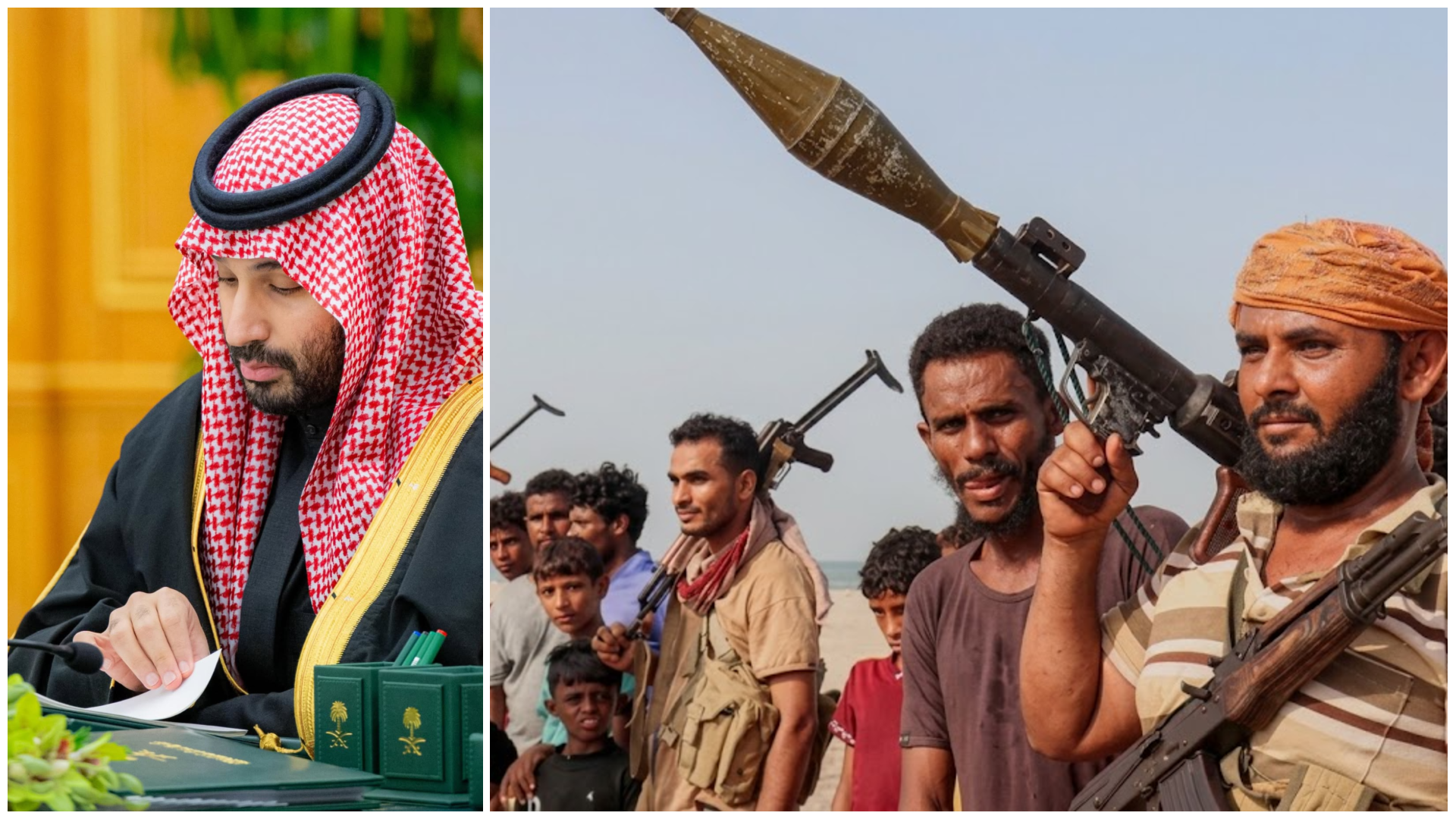
Crown Prince Mohammed bin Salman's visit to Cairo appeared at first glance like another routine summit in the Arab world. A meeting with President Abdel Fattah al-Sisi, declarations about regional security, freedom of navigation, and protecting shared interests. Except this time, it's hard to ignore the elephant in the room.
The Houthis in Yemen have accomplished something that Arab powers armed to the teeth failed to prevent: transforming Bab al-Mandab into a strategic lever capable of simultaneously pressuring Saudi Arabia, Egypt, the global energy market, and world trade.
Bin Salman arrived in Egypt precisely as the campaign against the Houthis escalated again. According to Reuters, the Houthis have expanded their control along Yemen's western coast and the Bab al-Mandab region, while Saudi Arabia once again faces missile and drone attacks and a real threat to its export routes.
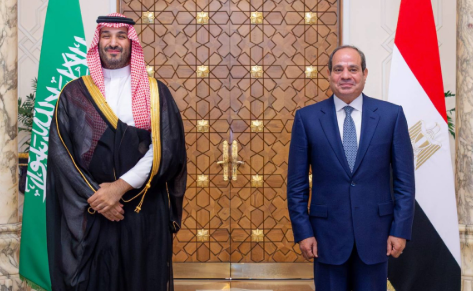
Egypt may not be a primary target of Houthi missiles, but it's paying a heavy economic price. President al-Sisi said the country lost approximately ten billion dollars in Suez Canal revenues following crises that damaged Red Sea shipping traffic.
And here is a question the Arab world doesn't like asking:
How is it possible that Saudi Arabia, one of the most armed and wealthy countries in the region, struggles to defeat a Yemeni organization that for years many dismissively described as "a militia of fighters in sandals chewing qat"?
According to SIPRI, Saudi Arabia spent approximately $83.2 billion on security in 2025, making it the world's eighth-largest military spender. It possesses some of the world's most advanced fighter jets, air defense systems, missiles, satellites, intelligence capabilities, and deep cooperation with the United States. And yet, the Houthis are still there.
This isn't a joke about the Saudi military. On the contrary. It's proof that we continue to measure military power with tools from the previous century.
The Mistake of "The Militia in Sandals"
The dismissive image of the Houthis is misleading. They're no longer just a small group of armed men emerging from mountain villages.
They've controlled large parts of northern and central Yemen for years, maintaining governance mechanisms, intelligence services, tax collection, ground forces, and an advanced array of missiles and drones. A CSIS study examining more than 4,100 Houthi attacks between 2016 and 2021 found systematic development of ballistic missile capabilities, cruise missiles, drones, and long-range weapons, alongside Iranian assistance in technology, components, and combat means.
In other words, the question isn't how a "primitive militia" defeats a superpower.
The question is how an asymmetric force, relatively cheap, decentralized, with geographic depth and willing to absorb losses, compels a modern state to invest enormous sums just to prevent it from disrupting daily life.
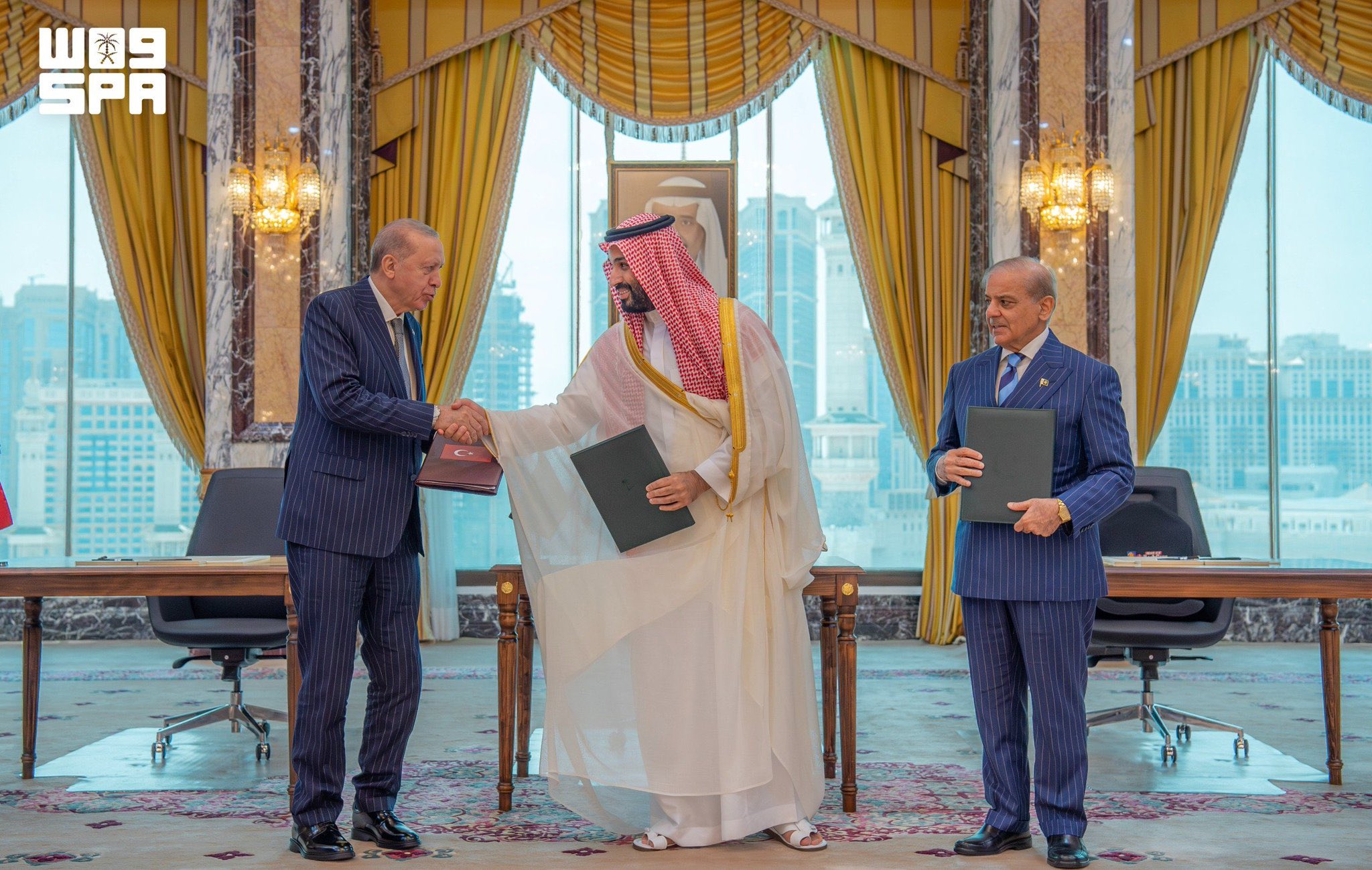
A fighter jet costing tens of millions of dollars isn't necessarily the optimal answer to a few mobile launchers hidden in mountains. An expensive interception system doesn't make a cheap drone attack unprofitable for the attacker. And in such warfare, even destroying hundreds of targets doesn't necessarily bring political resolution.
This is exactly what Saudi Arabia has learned over years of intervention in Yemen.
Israel Becomes Part of the Solution the Arab World Struggles to Discuss
And here comes the second paradox. As the Saudis search for ways to contain the Houthis, contacts are taking place, according to Axios, with American Central Command assistance, to examine Israeli aid to Saudi Arabia in intelligence, surveillance, and information gathering against the Houthis. CENTCOM also confirmed that senior commanders from the United States, Israel, and eight regional countries met in Germany. Participants included military chiefs from Saudi Arabia, Egypt, the United Arab Emirates, Bahrain, Qatar, Kuwait, and Jordan.
This is an event worth pausing over.
Israel and Saudi Arabia still don't maintain full diplomatic relations. Large segments of the Arab public continue to view Israel as a primary enemy. And yet, when the threat shifts from headlines about missiles to real-time intelligence, shipping lanes, drones, and mobile missile launchers, it turns out the regional security system already operates according to logic completely different from political rhetoric.
Operational normalization sometimes precedes state normalization. And this leads to the harder question.
If weapons-rich Arab states struggle so much against the Houthis, how can the Arab public still maintain the perception that Israel is the primary regional threat?
Can one really speak in the same breath about possible confrontation with Israel while simultaneously requesting information, warning, and security assistance when an Iranian-backed militia threatens Arab trade routes?
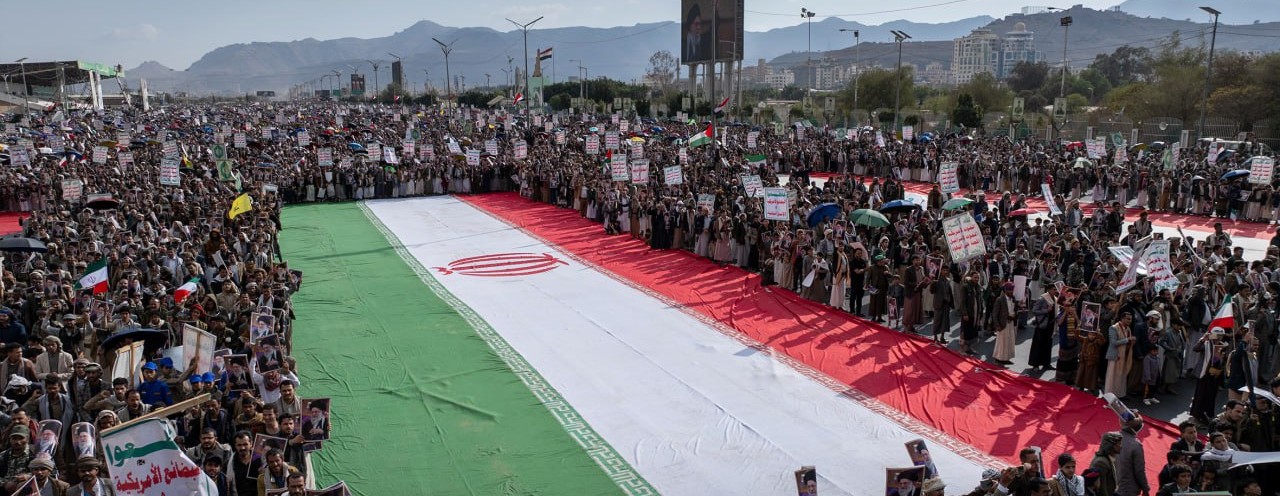
The answer is more complex than "hatred of Israel."
Israel and the Houthis aren't perceived on the same plane.
Public opinion data illustrates the gap. In the 2025 Arab Opinion Index, conducted in 15 Arab countries, 44 percent of respondents identified Israel as the greatest threat to the Arab world, compared to only 6 percent who cited Iran. Eighty-seven percent opposed their countries recognizing Israel.
But when the question was framed differently, asking citizens what the main threat to their own country was, the picture changed. Among Gulf state respondents, 14 percent pointed to Iran and only 9 percent to Israel.
This is an enormous difference politically.
Israel continues to occupy an exceptional place in Arab political imagination because the Israeli-Palestinian conflict isn't perceived there as an ordinary foreign conflict. In the survey itself, 80 percent of respondents defined the Palestinian issue as a pan-Arab matter. The Gaza war further strengthened Israel's centrality in public consciousness.
Therefore, a person can think Iran or the Houthis directly threaten his country while simultaneously viewing Israel as the historic and symbolic enemy of the entire Arab world.
From a purely rational perspective, there's tension here. From a political and historical perspective, there isn't necessarily a contradiction.
For decades, the Palestinian issue was a central component of Arab national discourse. Israel was a state, an army, an open adversary. In contrast, organizations like the Houthis and Hamas managed to present themselves to part of the public not as forces threatening "the Arab world" but as part of what they call "the resistance" to Israel and the West.
This framing doesn't mean the entire Arab public supports them. It explains why their actions may sometimes be judged through the lens of relations with Israel, not only through the damage they cause Arab states.
And here lies perhaps Iran's deepest strategic success and that of the proxy network it built over the years.
As long as the struggle is presented as a struggle against Israel, an armed organization can damage Arab states, threaten infrastructure, disrupt Red Sea commerce, and still gain certain legitimacy among audiences viewing it as part of the Palestinian struggle. This isn't just a military question. It's a war over defining the enemy.
The Gap Between the Street and the Situation Room
But in situation rooms, there's little space for symbols. There the question isn't who is the historic enemy of the Arab nation, but who's launching the missile now, where the launcher is located, and how to stop it.
Therefore, in the public sphere one can still hear sharp opposition to Israel, while at the same time Arab military chiefs sit in the same room with the IDF Chief of Staff within CENTCOM.
This gap may be one of the most important developments in the new Middle East. Not because Egypt or Saudi Arabia have become Israel's allies. They haven't.
Nor does it mean Israel can solve the Houthi problem for them. Israel itself struggles with the difficulty of locating and neutralizing decentralized systems thousands of kilometers from its borders. The significance is different.
In the Middle East, a separation has gradually formed between the enemy one talks about and the threat one must deal with. On the Arab street, Israel can continue to be presented as the great threat. In intelligence rooms, the picture may be completely different.
And this is perhaps the real story hidden behind bin Salman's Cairo visit.
Two Arab powers, Egypt and Saudi Arabia, aren't losing their strength. But they're discovering that the era when the number of planes, tanks, and billions alone determined who's strong and who's weak has ended. The Houthis understood this long ago.
And it's possible that Riyadh and Cairo are beginning to understand that Israel, which large segments of the Arab public still view as a threat, is simultaneously part of the regional security system they turn to when real threats arrive at their doorstep.