China's Electronic Warfare Plane Crosses Saudi Skies: What It Means for Israel
A Chinese Y-9LG electronic warfare aircraft flew through Saudi airspace near the Red Sea after joint drills in Egypt—signaling Beijing's deepening military footprint in the region and prompting Israeli defense officials to accelerate countermeasures
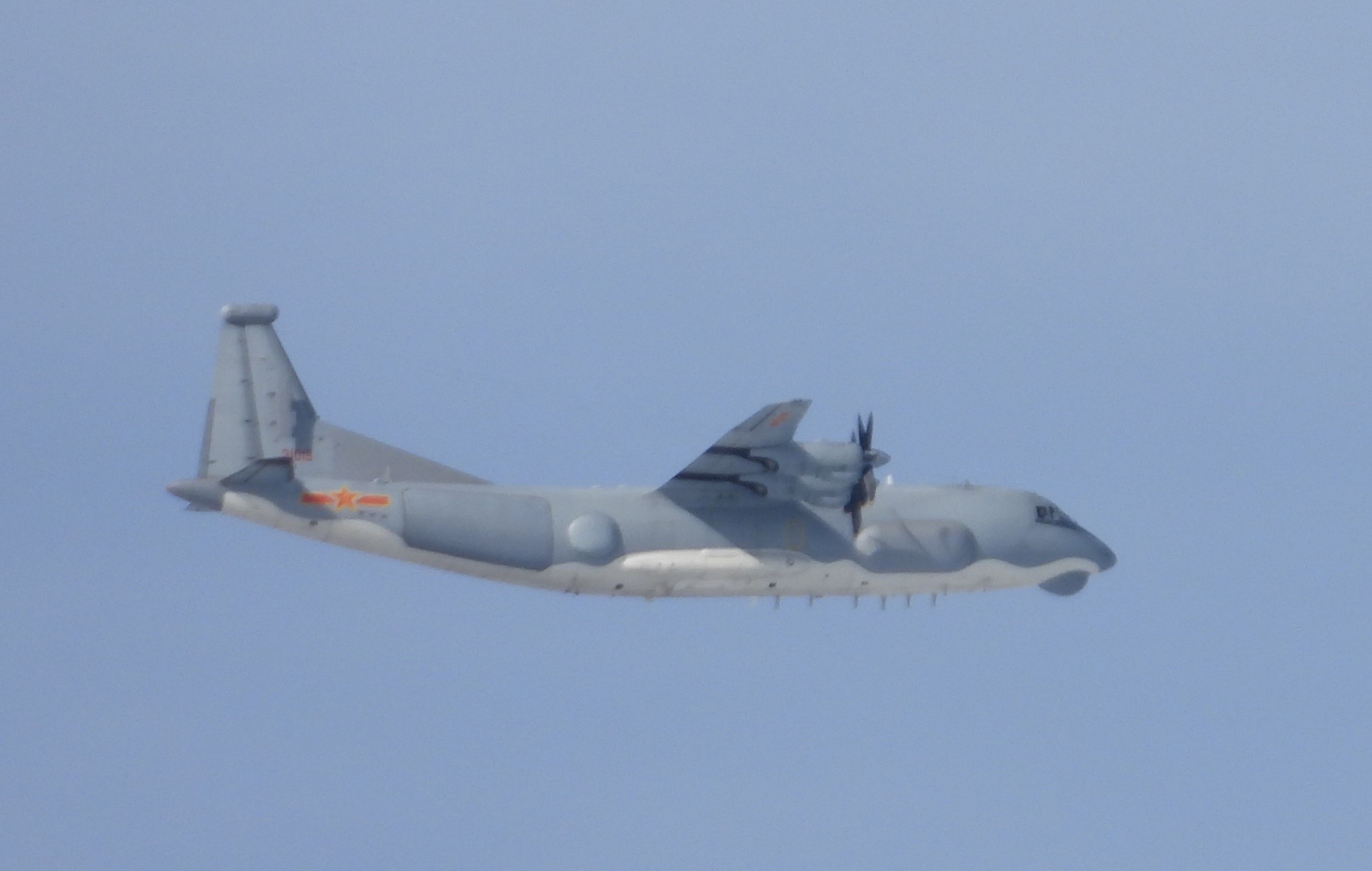
In mid-September 2026, beneath the usual diplomatic radar but visible to open-source intelligence monitors, an event unfolded that sent strategic ripples directly to Jerusalem and Western capitals.
An advanced Chinese electronic warfare aircraft, the Y-9LG, also known by its classified designation High New 13 or GX-13, was detected crossing Saudi airspace near the Red Sea port city of Yanbu, then continuing eastward toward Riyadh on its long journey back to its home base in China.
This was no routine flight path. It was a clear signal of an escalation in Chinese military presence in our region, following participation in the joint military exercise "Eagles of Civilization 2026" held on Egyptian soil.
The massive drill, conducted in late August and early September 2026, brought together formidable Chinese air power: advanced J-16 fighter jets, a massive YY-20A refueling tanker, KJ-500 early warning aircraft, and various helicopters.
But the technological crown jewel was the Y-9LG, a monstrous electronic warfare platform built on the Y-9 transport aircraft frame.
This aircraft is equipped with a massive "balance beam" antenna, advanced signals intelligence sensors (ELINT/SIGINT), and powerful long-range jamming capabilities able to neutralize enemy radar, GPS systems, and communications from vast distances.
The fact that this aircraft chose not to appear at the Al-Alamein air show due to its extreme technological sensitivity speaks volumes about the strategic importance Beijing places on flying its most advanced technologies into the heart of the Middle East, right under Israel's nose.
Secret Coordination Over Riyadh: Saudi Arabia Opens Its Skies
Beyond the bold military activity, the very flight of this Chinese intelligence and jamming platform over the Kingdom's airspace is not merely a technical event, it's a diplomatic earthquake. This route requires meticulous diplomatic coordination and official clearances from Riyadh authorities. This was no hostile intrusion or covert penetration, but a conscious, calculated decision by Saudi hosts to allow Beijing's most advanced electronic warfare aircraft to cross their sensitive airspace on its way back east. Yanbu, the strategic port city housing refineries and sensitive military installations, became a transit corridor for a foreign power directly competing with Washington.
Riyadh's choice to permit such an advanced Chinese aircraft to fly over its territory sharply reflects the dramatic shift in the regional balance of power. In recent years, China and Saudi Arabia have been tightening their security cooperation at a dizzying pace, from arms deals to drone collaboration to sensitive military technologies. While Riyadh continues to maintain its historic alliances with the United States, the decision to roll out the red carpet for Chinese aircraft in its sovereign airspace illustrates how the Middle East is becoming the central arena in the new Cold War between the two superpowers. For Israel, this is a troubling development requiring fresh strategic thinking about the airspace and intelligence environment surrounding it.
Beijing's Eyes Over the Gulf: Is Israel in the Electronic Crosshairs?
Did the Chinese superpower exploit the sensitive flight to spy on Israel? Questions surrounding the Y-9LG's collection capabilities during its return route naturally raise concerns in Jerusalem. The aerial distance from Yanbu to the nearest point in Israel (Eilat) stands at roughly 650 kilometers, and from Riyadh the distance jumps to over 1,000 kilometers. Although the aircraft possesses advanced jamming and collection capabilities at extended ranges, the curvature of the Earth significantly hampers reception of signals from Israeli ground-based radar or air defense systems from cruising altitude over central or southern Saudi Arabia.
Experts estimate that if the aircraft activated passive sensors en route, the primary target would have been the Red Sea environment and American and Western defense systems deployed in the area to counter Yemeni threats, not Israel directly. That said, Beijing is known never to miss an opportunity to calibrate systems, study foreign electromagnetic environments, and accumulate valuable intelligence. These long-range flights effectively serve as live air-to-ground laboratories for improving Chinese military capabilities.
Ultimately, the incident exposes a broader and more troubling picture of the new Middle East: China is stepping in with full force and deepening its military and technological presence, Egypt is opening the door to close cooperation, and Saudi Arabia is conducting a complex balancing act between Washington and Beijing. The Y-9LG is far more than an operational aircraft—it's a technological diplomatic ambassador projecting power. While this is currently a coordinated transit flight well-documented in open sources and not covert hostile activity, it sends an unambiguous message: the skies of the Middle East are crowded, complex, and becoming a quiet but dangerous arena of superpower competition.
Breaking the Mold: When Riyadh Opens Gulf Skies to the Chinese Dragon
The very fact that an advanced Chinese electronic warfare aircraft receives recognition and official clearance to cross Saudi airspace, in an area as strategic and sensitive as the port city of Yanbu, is no small matter. Yanbu is not just another dot on the map; it's the beating heart of the Kingdom's energy infrastructure, refineries, and advanced air defense systems, many of which deploy sensitive Western and American technologies. Granting free flight clearance to such a classified Chinese military platform reveals a dramatic leap in trust levels and tightens the geopolitical alliance being woven beneath the surface between Riyadh and Beijing.
In recent years, Saudi Arabia has been changing the regional rules of the game. The Kingdom is deepening its security cooperation with China across a long list of areas, from purchasing advanced drones to strategic discussions on defense systems and military technologies. The Y-9LG's flight through the Kingdom's skies fits neatly into this broader trend: it may not necessarily function as a focused real-time intelligence operation, but it serves as a resounding declaration of intent. Riyadh is signaling to the world that it is prepared to allow China deep aerial and military footholds in its sovereign skies, while carefully maintaining its historic ties with the United States.
For strategists and analysts in the Middle East, this incident is an identity card for the new and dangerous geopolitical reality. The region's airspace has ceased to be an exclusive monopoly and has become a live arena of competition where rival powers not only trade weapons but actively operate them, train alongside local partners, and study in depth the electromagnetic envelope of the area. China may not be replacing the United States as Saudi Arabia's traditional military ally, but it is climbing at tremendous speed and becoming an increasingly present, prominent, and threatening player in Middle Eastern skies.
Jerusalem's Wake-Up Call—Israel's Dramatic Conclusions
The unusual flight of the Chinese Y-9LG electronic warfare aircraft over Saudi Arabian and Red Sea skies is no longer an isolated incident that can be set aside. It serves as a magnifying glass on a new and complex reality: China is no longer a distant economic player focused solely on trade and infrastructure construction, but an aggressive military and electromagnetic power stepping in with full force at the heart of the Middle East. The convergence of Beijing's advanced technologies with the shifting alliances of Egypt and Saudi Arabia changes all the rules of the game for Israel and demands uncompromising strategic preparation.
Against the backdrop of this developing Cold War, Israel must adopt a multi-dimensional action plan to ensure its security and technological superiority:
The current incident does not require an immediate or dramatic military response, but it functions as a thundering alarm clock.
In conclusion: the regional arena has become more crowded, sophisticated, and dangerous than ever. To stay one step ahead of everyone, Israel must remain vigilant, sharpen its capabilities, and prove it knows how to defend skies and interests even in an era when great powers are colliding in our own backyard.