New York Times Removes Line Saying Israelis "View Themselves" as Oct. 7 Victims, Cites Editing Error
The New York Times removed a line saying Israelis "largely view themselves" as Oct. 7 victims from its NAZA article, citing an editing error.
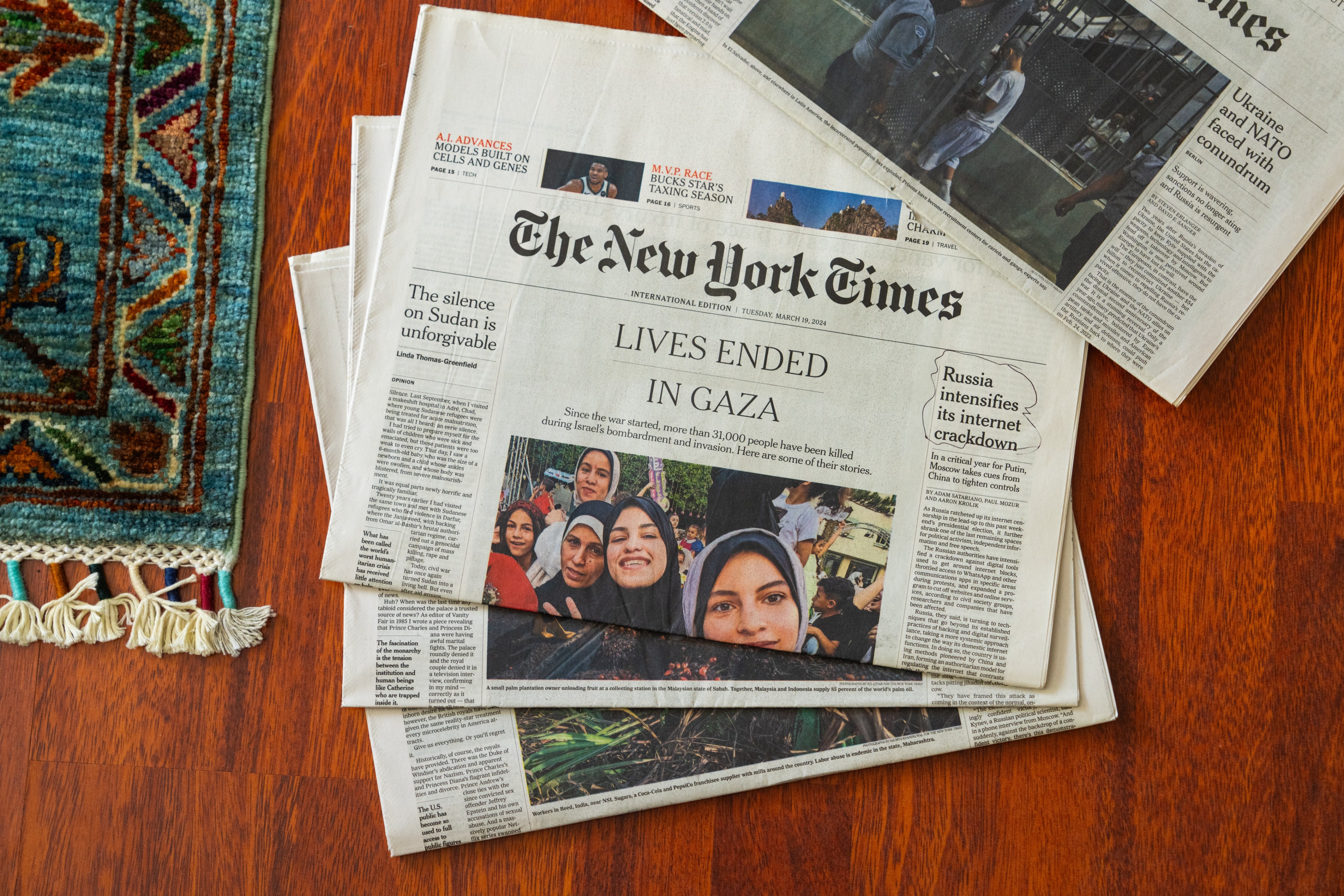
The New York Times has removed a sentence stating that "Israelis still largely view themselves as the victims of Oct. 7" from an article about the Israeli documentary "NAZA." The paper attributed the wording to an editing error after critics said it presented Israelis' status as terror victims as a matter of perception.
The article, published Sept. 14 by Times Jerusalem correspondent Isabel Kershner, examined the Israeli documentary, which looks at the killing of Palestinian civilians during the war in Gaza. It contrasted the film's reception abroad, where it won the Special Jury Prize at the Venice Film Festival, with the backlash it has drawn in Israel.
The sentence first noted that Israelis are divided over blame for the policy, military and intelligence failures that preceded the attack, and then added the line about victimhood. Journalist and former IDF serviceman Eitan Fischberger objected that the wording appeared to treat the fact that Israelis were victims as a question of perception. Tamar Sternthal, Israel director of the media watchdog CAMERA, also questioned the framing on X.
In an editors' note, the Times said the sentence had been meant to describe Israelis' perception of the government's military response to the attack, but had inadvertently suggested that their experience as terror victims was a matter of perception. The paper said the line had been removed. The Times communications account shared the note on X on Sept. 16.
The correction is not the first time the Times has had to walk back its coverage of the war.
Less than two weeks after the Oct. 7 attack, the paper added an editors' note to its reporting on the October 2023 explosion at Al-Ahli Arab Hospital in Gaza City. The note acknowledged that early versions relied too heavily on claims by Hamas, which blamed an Israeli strike, and did not make clear that those claims could not be immediately verified. U.S. and Israeli intelligence later attributed the blast to a misfired Palestinian rocket.
In July 2025, the Times added an editors' note to a front-page story featuring a photo of an emaciated Gazan toddler, Mohammed Zakaria al-Mutawaq. The note said the paper had since learned the child had preexisting health problems, a detail missing from the original report.
The latest episode also comes days after a peer-reviewed study examined the paper's war coverage. The study, by Edieal Pinker of Yale School of Management, found that the Times' reporting after October 7 consistently portrayed Palestinians as "passive victims" and Israel as the "sole aggressor". Pinker reviewed 1,559 articles published from Oct. 7, 2023, through June 7, 2024, and found that the paper frequently omitted Israeli military deaths and downplayed Palestinian violence. Pinker said he was not accusing the newspaper of bias, since that would require a benchmark for unbiased reporting, but was pointing out imbalances that could shift reader opinion. The Times disputed Pinker's findings.